
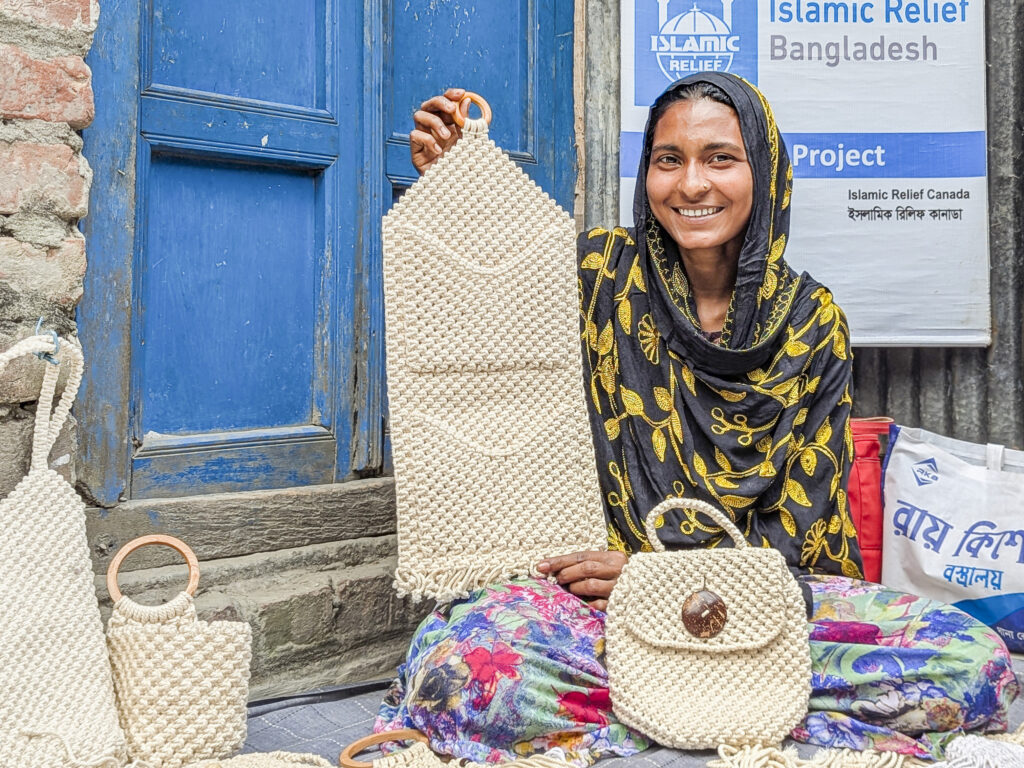
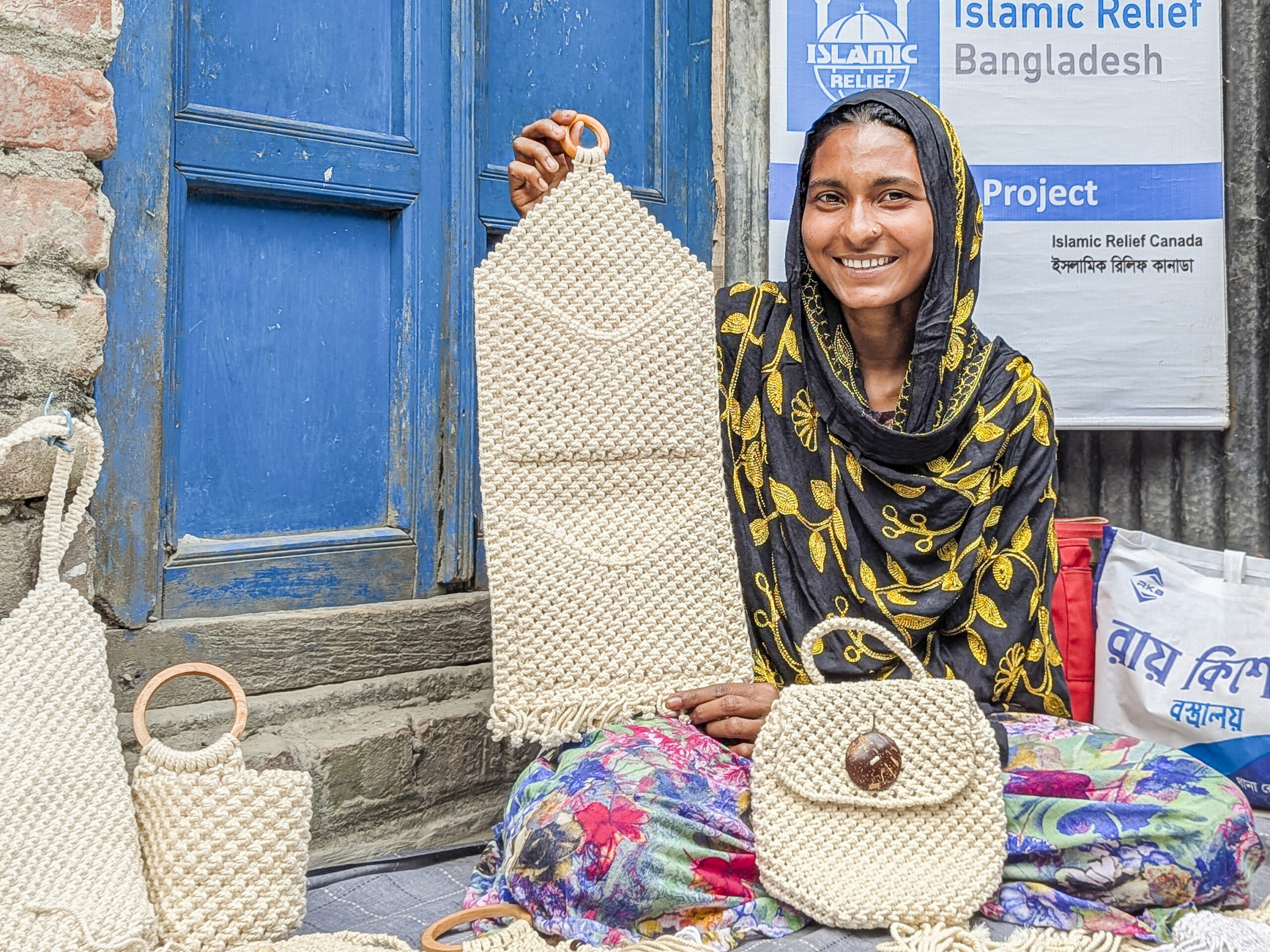
“There was a time when we survived on just one meal a day. My husband had no steady work, and running the household was incredibly difficult. Today, I can earn an income, save money and support my family. I never imagined that one day I would not only run my own business but also train other women.”
These words were shared by Laboni Akter, 28, from Purbo Panjarbhanga in Kaunia, Rangpur. Laboni lives with her husband and their young daughter.
Life was not always like this.
Although she was a bright student, poverty forced her to leave school before completing her education. She married at an early age, hoping for a better future, but financial hardship followed her into married life. Her husband depended on irregular fishing work, often spending days without any income.
“After my daughter was born, our struggles increased even more,” Laboni recalls. “My husband would sometimes go fishing and then stay at home for several days because there was no work. There were times when we survived on just one meal a day.”
Wanting to change her circumstances, Laboni joined a women entrepreneurs’ group supported through Islamic Relief’s SEED Project. Other members later elected her as the group’s secretary, a responsibility that helped build her confidence and leadership skills.
Through the project, she participated in leadership, financial management and dairy farming training. Later, she received financial support and used the money, along with her own savings, to buy a dairy cow.
“From the beginning, I wanted to become an entrepreneur,” she says. “I always wanted to do something different and take responsibility for my family.”
A turning point came when she received training in macramé, a handicraft that opened up a new source of income. What began as a new skill soon became a small business. Laboni started producing handmade items, taking customer orders and selling her products locally.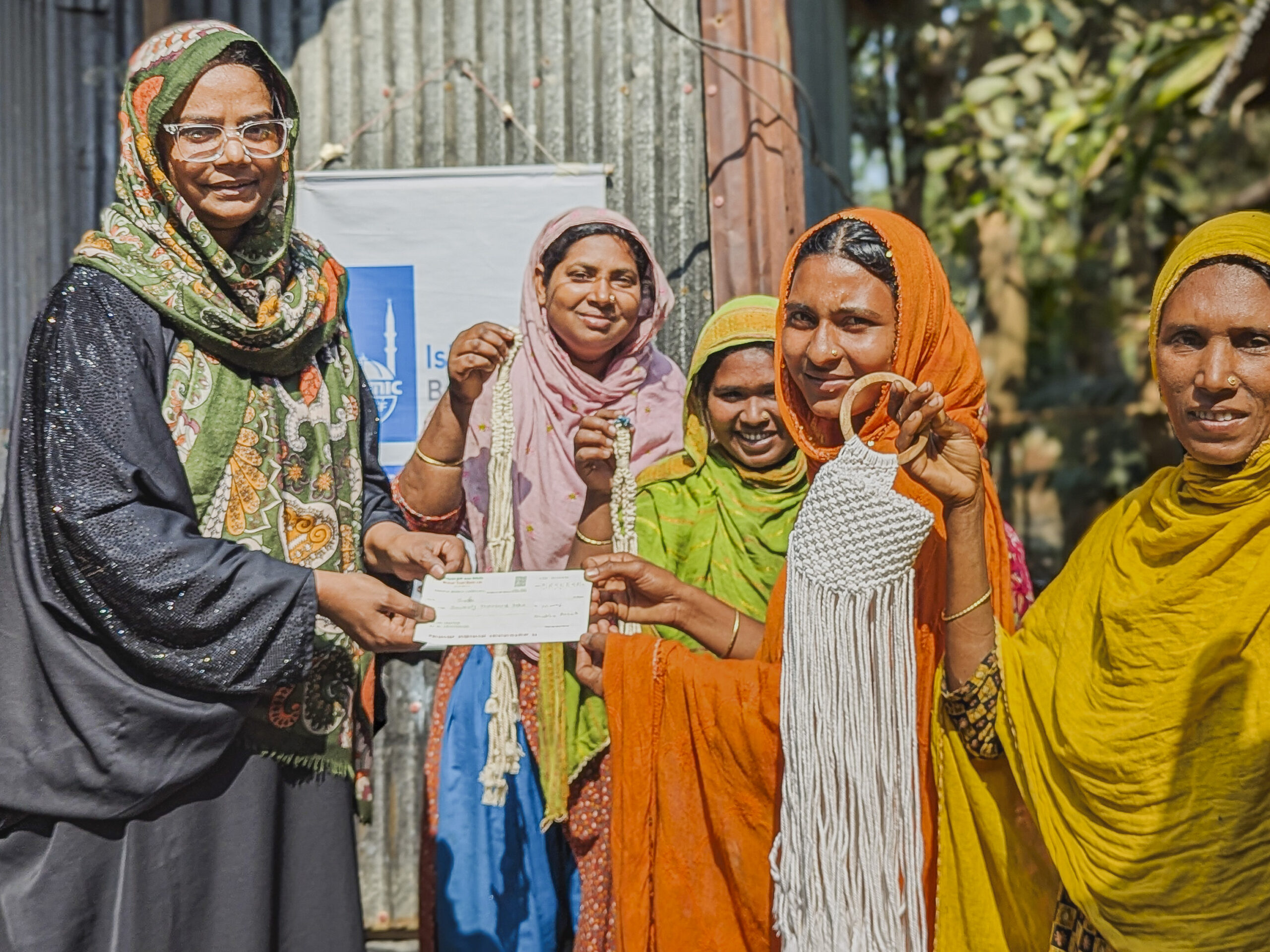
Today, she is doing more than earning an income. She is also helping other women learn the same skill by providing training in nearby groups.
“This craft has increased my dignity,” she says. “Before, some people would not even speak to me. Now they come to me to learn.”
The changes were not limited to Laboni alone. The lessons she learned through weekly group meetings influenced her family as well. She regularly shared her experiences with her husband, encouraging him to work harder and explore new opportunities. Together, they leased agricultural land and expanded their small-scale farming activities by raising ducks and chickens.
Over time, their family’s financial situation steadily improved. They built up savings, invested in livestock and developed a vegetable garden at home. With greater confidence and knowledge, Laboni also began accessing government social protection and healthcare services available in her area.
“The very difficult days of my life are now coming to an end,” she says. “Through handicrafts, I have started earning. After meeting our family’s food needs, I can also earn extra money by selling eggs.”
Looking back, Laboni believes the biggest change has been in her confidence and sense of self-worth.
“They made me capable,” she says. “Because of them, I can work, earn and even train others. Their encouragement inspired me to save, work hard and believe in myself. My husband is also much more hardworking now.”
Today, Laboni’s story is not just about earning an income. It is a story of determination, confidence and resilience. From a time when her family struggled to put food on the table, she has become a respected entrepreneur and mentor in her community, helping create a brighter future for herself, her family and other women around her.