মিডিয়া
১৫ আগস্ট জাতির পিতা বঙ্গবন্ধু শেখ মুজিবুর রহমান- এঁর ৪৮তম শাহাদাত বার্ষিকীতে জাতীয় শোক দিবস উপলক্ষ্যে ইসলামিক রিলিফ বাংলাদেশ বিভিন্ন কর্মসূচি পালন করে।
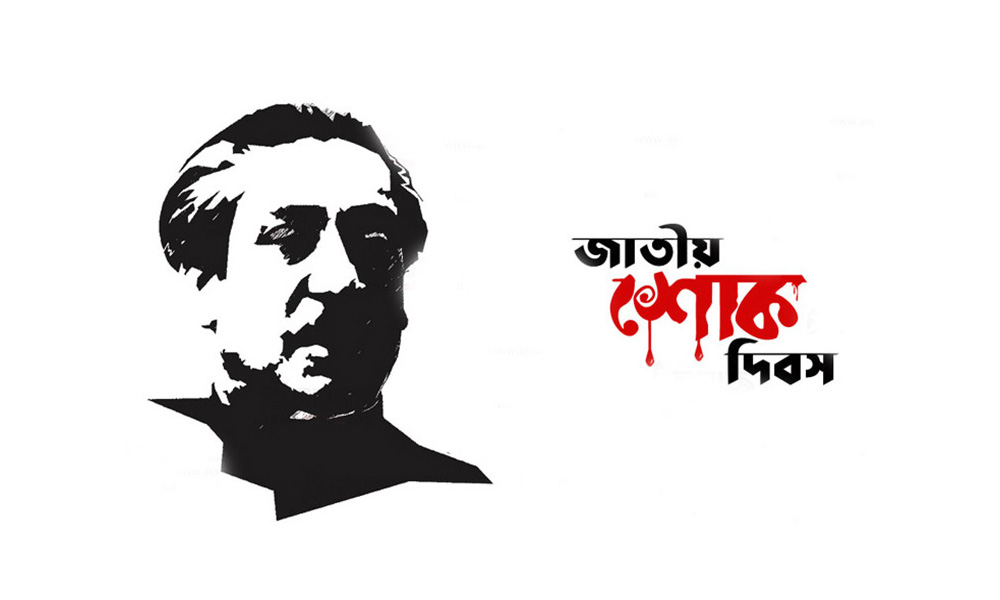
১৫ আগস্ট জাতীয় শোক দিবস উপলক্ষ্যে গণপ্রজাতন্ত্রী বাংলাদেশ সরকারের মন্ত্রিপরিষদ বিভাগ কর্তৃক ৯ আগস্ট ২০২৩ জারিকৃত প্রজ্ঞাপন অনুযায়ী সংস্থার বারিধারাস্থ কান্ট্রি অফিস ও দেশের বিভিন্ন এলাকায় অবস্থিত আঞ্চলিক অফিসসমূহে জাতীয় পতাকা অর্ধনিমিত রাখা হয়।
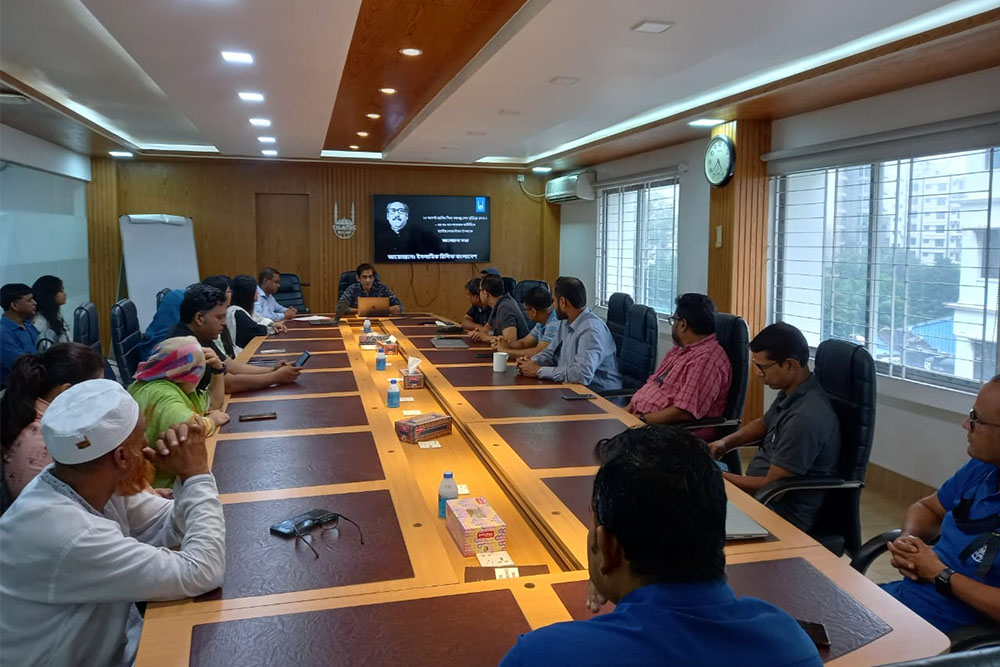
জাতির পিতা বঙ্গবন্ধু শেখ মুজিবুর রহমান ও তাঁর পরিবারবর্গের জীবনী নিয়ে আলোচনা সভা অনুষ্ঠিত হয়। ইসলামিক রিলিফ বাংলাদেশের এই আলোচনা সভায় ১৫ আগস্টের নৃশংস হত্যাকান্ডের তীব্র নিন্দা জ্ঞাপন করা হয়। আলোচনায় বঙ্গবন্ধুর জীবনের নানাদিক উঠে আসে। সংস্থার কান্ট্রি অফিসের সকল কর্মকর্তা ও কর্মচারী এই আলোচনা সভায় অংশগ্রহণ করেন।
১৯৭৫ সালের ১৫ আগস্ট কালো রাত্রে বঙ্গবন্ধু ও তাঁর পরিবারের সদস্যদের নির্মম হত্যাকান্ডে শহীদদের শ্রদ্ধায় ইসলামিক রিলিফ বাংলাদেশের সকল সদস্য কালো ব্যাজ পরিধান করেন।
ইসলামিক রিলিফ বাংলাদেশের ঢাকার প্রধান অফিস ও আঞ্চলিক অফিসসমূহে জাতীয় শোক দিবস উপলক্ষ্যে ড্রপডাউন ব্যানার স্থাপন করা হয়।
গোলাম মোতাসিম বিল্লাহ
এক্টিং কান্ট্রি ডিরেক্টর
ইসলামিক রিলিফ বাংলাদেশ
Piyara, the youngest of 5 siblings, grew up in a family with limited income. Despite this, Piyara’s father ensured that all of his children received an education. His untimely death not long after Piyara finished high school was heart breaking for the family with no other income, Piyara was forced to abandon her dream of further education.
To help support her family, Piyara’s mother arranged a marriage between Piyara and a teacher who supported her to continue her education. Together, they had 4 children, but still, the couple struggled to make ends meet. Tragically, in 2012, Piyara’s husband passed away suddenly from a heart attack, leaving her without the financial stability her husband provided and at a loss as to how to manage a family on her own.
A family’s struggle and triumph
Piyara’s struggles were numerous, particularly as no relative would help to support her. She found it difficult to provide 3 meals a day for her children and pay the rent for their small home. Her worries were compounded by the fact that her children’s education was also at risk, a painful reminder of her own past.
Piyara and her husband had always vowed to ensure that their children received the education they deserved, no matter what challenges they faced.
Thankfully, Piyara’s situation took a turn for the better after discovering Islamic Relief’s Orphan Sponsorship Programme . The programme is designed to assist orphaned children and their families by providing them with much-needed financial support.
Through this programme, Piyara was able to meet her family’s needs and improve their quality of life. She kept her children in school, with her eldest daughter going on to receive a first-class university degree in economics.
A newfound sense of purpose
Reflecting on her journey, Piyara said, “losing my life partner was an immense shock and trauma that turned my life upside down overnight. As he was the sole breadwinner of our family, my primary concern was to ensure the safety and security of my loved ones in his absence. Despite these challenges, I remained resolute in my determination to provide a better life for my children.”
Piyara devoted herself to raising her young children, taking on the roles of both mother and father. To better support her family, she joined self-help groups facilitated by Islamic Relief. Through these groups, she received training on income generation, leadership, child rights and savings, among other essential support.
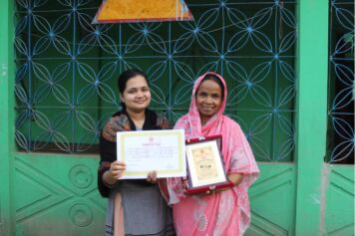
Piyara being awarded the Ratnagorva Award (Best Mother) from the Shantiganj Upazila administration in Sunamganj.
With encouragement and support from Islamic Relief, Piyara discovered a newfound sense of purpose and community. She began providing private tuition to students in her neighbourhood, where her ability to explain complex topics made her immensely popular in her village, and her teaching skills allowed her to expand her classes from just 3 students to multiple groups. The income generated from providing private intuition allows Piyara to continue providing for her children.
Piyara treats each student as if they were her own child. She’s known for finding ways to reduce fees for underprivileged children, and as a result, she has earned great respect and affection from the people in her village. They fondly refer to her as ‘Master Apa’ (‘Apa’ translating to ‘Older Sister’ in Bengali) – a title that reflects both her expertise and her compassionate nature.
Piyara’s tireless efforts and unwavering commitment have earned her numerous accolades, including the esteemed Joyeeta Award in 2022, presented by the Ministry of Women Affairs under the Education Category at Upazila level. She was also honoured with the Ratnagorva Award for Best Mother by the Shantiganj Upazila administration in Sunamganj – the award highlights the commendable efforts of mothers who have overcome adversity to raise their children.
Piyara’s story is a reminder that with determination and support, women can overcome even the most challenging circumstances. Her story is a testament to the transformative power of empowering women and the enormous potential that can be unleashed when women are given equal opportunities to succeed.
According to the United Nations Population Fund, in Bangladesh, nearly 51% of girls are married for the first time before their eighteenth birthday and almost 1 in 5 girls get married before the age of 15.

“For some families, marriage is sometimes seen as the only way for them to survive,” says Sharmin Ruba from Islamic Relief Bangladesh, explaining that poverty is a key factor behind girls getting married so early. “As some parents see girls as a financial burden, and the cost of a girl’s marriage usually rises with age, marrying off their daughters early is a way to reduce the cost associated with the marriage, and means they have one less mouth to feed.”
Forced and underage marriage hurts young girls the most, as they are more likely to experience domestic violence, sexual abuse, and depression, as well as early pregnancy, which can result in a multitude of health problems for them and their children.
Girls who resist forced marriages are usually under enormous pressure from their families and may be threatened with violence. In many countries, the lack of access to correct knowledge and information, along with stigma and cultural barriers, prevent girls from learning about their rights.
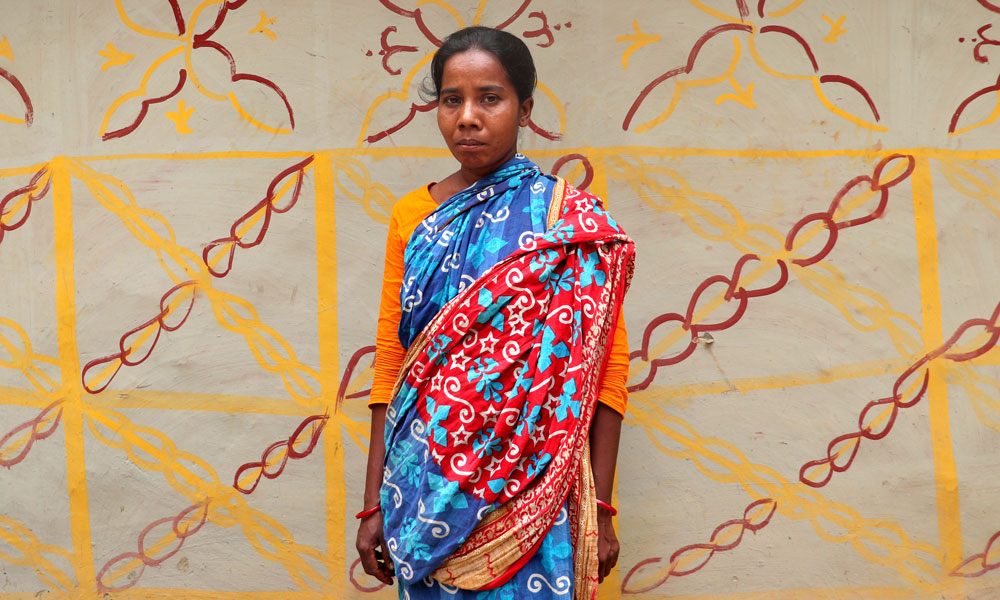
Olivia*, 33, is a member of the Indigenous Santal community in Bangladesh and a Christian. She was only 13 years old when her father introduced her to a considerably older man whom, she was told one night, she was to marry. Olivia says, “I didn’t understand what marriage meant at all, so I didn’t argue with it.” Like many children in similar situations, Olivia, who had already given up her schooling in anticipation of marriage, had no say in the matter.
The man she married was already divorced, unemployed and had a serious alcohol abuse problem. After the wedding, Olivia’s poverty-stricken parents sent her to live with her new husband, and her situation immediately deteriorated.
Olivia was mistreated and physically abused. She received almost nothing to eat and was not allowed to leave the house. “There was not a single day when I was not beaten by my husband. He used to beat me mercilessly without any reason. I had nowhere to go. I felt so helpless.”
Olivia became pregnant early in her marriage, which only made her situation worse. Her husband continued to beat her throughout every pregnancy, and the children would also bear the brunt of his anger.
“Sometimes I thought about committing suicide, and the only thing that would stop me was the thought of who would take care of my children in my absence. Thinking of the harsh reality they would have to live in, I refrained from taking my own life.”
Knowing she couldn’t go on living with this abuse, Olivia decided to involve her husband’s family and her village head, but they forced her to remain in the marriage. A distraught Olivia also needed to work to provide for her children, since her husband didn’t have a steady job and spent the little money that he earned on alcohol.
Olivia got a seasonal job working in the fields, but it didn’t pay much. That is when she heard about Islamic Relief’s project for ethnic minorities in Nawabganj in 2020. Funded by Forum Civ, the initiative supported 600 women to enhance their rights, dignity, and income generation abilities. Olivia joined the project, which held regular group meetings.
Olivia decided to participate in the self-help group teaching women about their economic and legal rights. She gained invaluable knowledge about a range of issues, such as violence against women and girls, health and hygiene, early marriage, and dowry. As part of her training, she also learned how to find employment and save money.
Now more confident and aware of her rights, Olivia found the courage to reach out for help to stop the violence her husband was inflicting on her and the children. After calling the emergency number she had been taught by Islamic Relief, Olivia received police assistance to file a complaint against her husband, who had to sign papers stating that he would not harm Olivia and her children.
This led to him apologising, and leaving to find a job in the capital, where he now works as a rikshaw puller. He sends money home every week, and Olivia has started rearing livestock. “I am able to save some money now after paying off all my expenses. I dream of one day having my own poultry farm and give my children the chance to get an education and learn about their rights.”
Olivia says that she is extremely grateful to Islamic Relief, “I had no idea of my rights. I had to suffer a lot and remained silent during brutal oppression by my husband. I am grateful to Islamic Relief for educating me about gender-based violence. It is now possible for me to make financial and household decisions on my own. As I continue to strive to be self-reliant, I want to make sure other ethnic women receive the same education and become self-sufficient as well.”
With the help of Islamic Relief, Olivia and her children are now doing better and are getting the care and support they need.
Islamic Relief provide information to parents, teachers, village heads and local organisations about the harm caused by child marriage and highlight the importance of girls’ education.
*Name has been changed to protect her identity.
Next week, governments from around the world will gather in Egypt for COP27. The annual event seeks to accelerate international efforts to confront the climate crisis. Islamic Relief’s Head of Global Advocacy, Shahin Ashraf, explains why COP matters to our organisation and what we’re hoping will come from this year’s event.
The Conference of Parties (COP) is the supreme decision-making forum of the United Nations Framework Convention on Climate Change (UNFCCC) – a landmark international environmental treaty. The event brings signatory governments together once a year to discuss and agree how to jointly address climate change and its impacts.
The governments attending COP are signatories to the UNFCC, or other key treaties such as the Kyoto Protocol or the Paris Agreement. But negotiators, civil society actors, businesses, the media and non-government organisations also take part in the 12-day event.
Negotiators, including government ministers, work to reach agreements, with ‘observer’ organisations involved to ensure transparency and bring broader perspectives to the process.
This year marks the 27th session of COP, which will run from 6 – 18 November in Sharm-El-Sheikh, Egypt.
Eighty per cent of the world’s land mass has been impacted by climate change, influencing most of the world’s 7.7 billion people – forty per cent of whom are living on the frontline of the climate crisis.
Islamic Relief is committed to protecting the environment and advocating on environmental concerns. We work to help communities around the world become more resilient to climate change, aim to reduce our own carbon footprint, and undertake advocacy to promote substantial and equitable reductions in greenhouse gases.
Two years ago, Islamic Relief acquired observer status, allowing us to take part in COP proceedings such as negotiations on the Global Goal on Adaptation – a commitment to work on strengthening resilience and reducing vulnerability to climate change.
Last year, Islamic Relief was deeply involved in talks between countries on adaptation and in the final negotiations on the Global Goal on Adaptation.
The theme of COP27 is delivering for people and the planet. The incoming Egyptian COP27 Presidency has identified a range of topics focused on improving implementation and raising ambition on issues related to climate change.
It has designated several days for focused discussions, including panels, roundtables and other formats to a reach a wider audience. The topics include financing, adaptation, water, gender, biodiversity and youth and future generations.
As well as these specific focuses, COP27 will build on the outcomes of last year’s event to deliver action on critical issues from reducing greenhouse gas emission to delivering on the commitments to finance climate action in low-income countries.
As we see the world grappling with a cost-of-living crisis, we must not ignore the fact that the countries that have contributed the least to climate change are suffering its most severe impacts.
Without adequate financing, the fallout from climate-related disasters such as the recent flooding in Pakistan will stretch on for generations. It will be a truly be a failure if global decision makers do not properly respond to the dire situation many countries are facing.
A lack of financing will plunge many low-income countries further into debt as they bear the brunt of the climate change crisis, experiencing more frequent extreme weather events, rising sea levels and increasing temperatures.
If COP’s theme for this year is truly delivering for people and the planet then we must truly put the cost of action at the forefront of climate change, as the cost of inaction will have truly grave consequences now and for our future generations.
Early marriage – often called child marriage – is common in rural Bangladesh despite laws preventing girls marrying before age 18. However social pressure, a lack of opportunities for women and girls, and the harsh realities of poverty often leave parents feeling they have no choice but to marry their daughters off at a young age.
Early marriage can have disastrous effects on every aspect of a girl’s life. Marriage often means an end to education, trapping girls and their families in a cycle of poverty where they are dependent on the income of male family members. It can have major implications on the mental and physical health of the girl, particularly if she becomes pregnant at a young age. Girls subjected to early marriage have also been found to be at a greater risk of abuse and contracting sexually transmitted infections.
Islamic Relief is working to educate communities on the dangers of early marriage and relevant national laws preventing it. In Bangladesh’s Rangpur Division, we launched the Preventing Early Marriage in Bangladesh project, targeting 300 girls aged 11-17 and their families. The girls we support come from poor homes and are subject to social exclusion and marginalisation.
One of the girls the project supports is Marufa, a 15-year-old who managed to escape the clutches of early marriage.
Marufa was just two-and-a-half years old when her mother, Sharifa, left her abusive husband and returned to her family home.
Marufa’s grandfather is a day labourer who struggled to support his family, so Sharifa also sought employment, working at a poultry farm where she earned less than £1.50 each month.
Marufa’s mother has promised to support her daughter’s education now that she knows the dangers of early marriage.
Despite the family’s difficult situation, Sharifa wanted to support her daughter’s education as Marufa is a talented student and teachers have high hopes for her future.
However, when Marufa turned 15, many interested grooms began sending proposals to her mother. While Marufa knew about the dangers of early marriage and opposed to becoming a wife at such a young age, Sharifa was unaware and eventually bowed to community pressure.
“People drove me crazy saying that now is the time to get Marufa married,” Sharifa says. “My surroundings kept telling me that no matter how many degrees my daughter earns, ultimately, she has to end up running her household and raising children. I had no choice but to agree with them,” Sharifa says, adding: “What else can I offer my little girl?”
Marufa was selected to take part in Islamic Relief’s project combatting early marriage. Sharifa also became involved as a member, and later president, of the local self-help group.
When news of Marufa’s impending marriage spread, group members and Islamic Relief intervened to explain to Sharifa the dangers of early marriage and the laws prohibiting it.
After the meeting, Sharifa promised not to marry Marufa off before she reached age 18, and committed to supporting her studies.
“I was convinced to arrange Marufa’s wedding because I was not aware of the harmful consequences,” Sharifa says. “I did not know anything about the existing laws of marriage. I will continue [supporting] her studies and won’t arrange her wedding.”
For her part, Marufa was relieved to have escaped an unwanted early marriage. “Marriage at an early age can pose multiple threats to young girls’ lives, health and future prospects,” she says.
“I will continue my study to get a decent job to earn my livelihood. I have the confidence to speak for others. I will work to prevent early marriages for girls like me.”
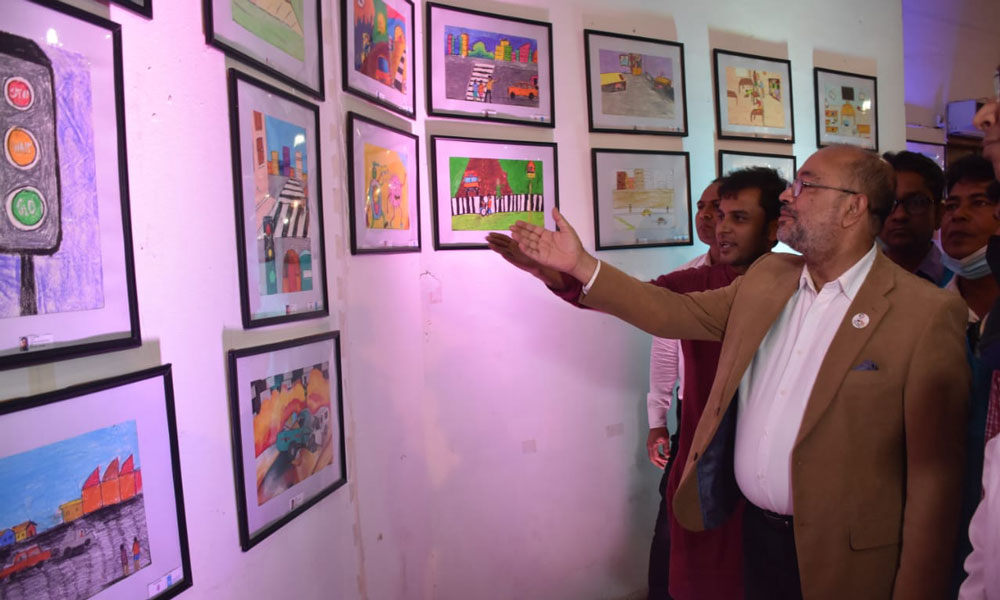
To mark the occasion of disaster preparedness day, Islamic Relief Bangladesh organized a daylong Art exhibition at National museum at Dhaka on 14 March. Recently Islamic Relief organised an art competition which was designed on “Urban Disaster and Preparedness” and a total of 920 children including autistic children had participated there. They drew on 5 given topics – Earthquake, Fire Incident, Road Accident, Environmental Pollution and COVID-19. As a sequel to Art competition Islamic Relief arranged this art exhibition and Dr. Enamur Rahman MP, Honorable State Minister, Ministry of Disaster Management and Relief had inaugurated the exhibition. Minister was impressed seeing the talent of the little artists and appraised Islamic Relief to arrange such an art competition which aware children about urban hazards as well as preparedness. Country Director of Islamic Relief Akmal Shareef was also present in the event.
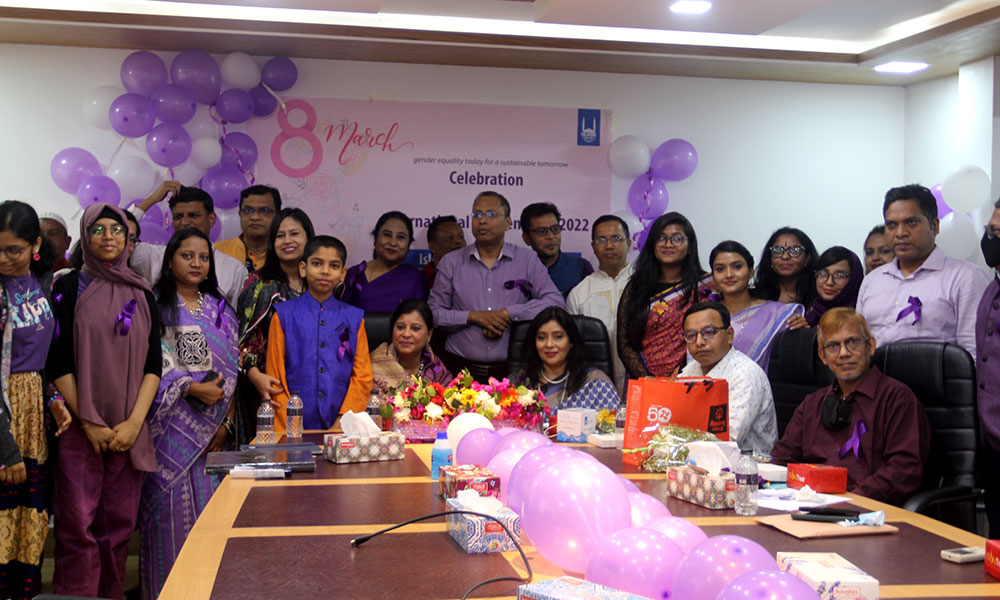
Bangladesh country office celebrated International Women’s Day on 8 March and hosted a small event. Five speakers were invited to share their insights including two female MPs of national assembly, a female ward counselor, a famous female director and a University professor. It was a joyful experience for Islamic Relief Bangladesh country office staff. Short speeches were delivered by all five guests where they shared their personal experiences. Both female MPs said today women are being recognized in their fields across the world. The contribution of women in every sphere of life is massive. Ward Counselor and film director said society often discriminates women. They inspired female staff to step out of their comfort zone and achieve their goals despite several obstacles. University Professor spoke about gender equality and fair treatment of women and stresses on the importance of change management and adaptability.
This is the story of an aged woman, Duloy BiBi who lives in Lakhairgram in Kanaighat upazila under Sylhet division. Duloy BiBi who is 52 years old lives with her husband Israk Ali who is physically challenged and unable to support her for any work. They have two daughters but their poverty had made them bound to marry their daughters off at a very young age. Unfortunately, both of them are not financially solvent. They are unable to extend any help to their helpless parents. As such, most of the time Duloy Begum and her husband starve. Duloy begs every door of her village as well as neighbouring villages to get some food and money. Thus, she struggles to meet up her daily necessities.
They consider themselves fortunate as they have a small hut of their own. The hut is made of mud and bamboo. “I am happy as I have a small home to sleep. Otherwise, I would have stayed on other’s land. My day starts with the thought of how would I manage today’s meal but I don’t need to think where would I sleep at night.”
Her fate jeers with her. Flood is a very common phenomena to them specially for the people of Kanaighat. Upstream water from India regularly inundates the area and it occurs suddenly without giving any forecast. The day when her hut was inundated with floodwater there was none except her husband Ishrak and she. Mud started melting, corners of the house started breaking by the water force. She was perplexed thinking what would be her next course. She stood still, had no clue what she should do. Her husband was still inside the house, witnessing all of this but was unable to do anything. “I was frightened to see the floodwater was flowing intensely and I was worried how would I move my husband? I shouted for help but others were also trapped by floodwater.”
The whole area was submerged with flood water. Some lost their livestock. Many of them had no food and water to drink. Duloy Bibi had to starve for 2 days as they had no food to eat. The union chairman with his team had distributed some dry foods almost after 2 days. The support was not enough.
“I wasn’t home for five days. The house isn’t in a livable condition. The flood damaged my hut and caused a great loss for me,” she also added.
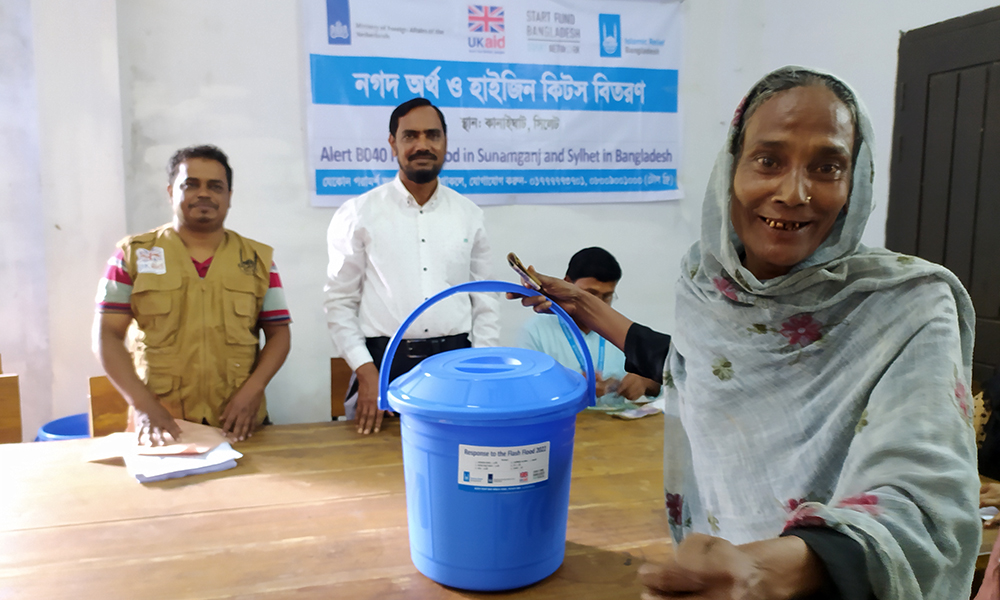
On 29 May Islamic Relief staffs visited the area and assessed the impact of flash flood. They discussed with the community people. Duloy Bibi got selected considering her vulnerability. She had no clue what support she would receive from Islamic Relief. Finally, on 5 June she received a card with her name and picture in it. She was asked to visit Upazila Parishad Complex on 7 June 2022.
She was extremely delighted after having the hygiene kits as well as cash support from Islamic relief. “I am so happy to have this pack. We are going through intense hardship for the last few days. Flood has caused severe disruption in our daily activities. I still go door to door to beg food and money. However, my community is heavily affected due to flood and not in a position to help me. I hardly collect anything from them.”
She had a big smile after the pack was handed over to her. She thanked Start Fund and other donors for helping her and also showed gratefulness to Islamic Relief Bangladesh to select her as project participant. In her words, “Without IRB’s intervention and help, life would have been more difficult. I can now buy some foods for my husband with the money. I had no clean jar in my home to collect drinking water. Now I can store water for drinking. From now, I won’t need to go outside at night for water. I am very contended now.”
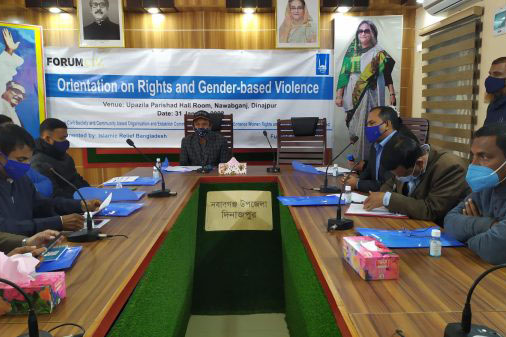
দিনাজপুরের নবাবগঞ্জে জেন্ডার ভিত্তিক সহিংসতা ও মানবাধিকার শীর্ষক কর্মশালা অনুষ্ঠিত হয়েছে। সোমবার (৩১ জানুয়ারি) সকাল ১০টায় বেসরকারি সংস্থা ইসলামিক রিলিফ বাংলাদেশ এর আয়োজনে উপজেলা পরিষদ হলরুমে এ কর্মশালা অনুষ্ঠিত হয়। ইসলামিক রিলিফের নবাবগঞ্জ শাখার প্রজেক্ট ম্যানেজার ডাঃ মোঃ কামরুল ইসলামের সভাপতিত্বে ও সংস্থার সেইফগার্ডিং এন্ড প্রোগ্রাম ডেভেলপমেন্ট কো-অর্ডিনেটর রুবায়েত মলিকের সঞ্চালনায় কর্মশালায় প্রধান অতিথি হিসেবে প্রধান অতিথি হিসেবে উপজেলা পরিষদের চেয়ারম্যান মোঃ আতাউর রহমান, বিশেষ অতিথি উপজেলা নির্বাহী অফিসার অনিমেষ সোম, থানার অফিসার ইনচার্জ(ওসি) মোঃ ফেরদৌস ওয়াহিদ, উপজেলা ভাইস চেয়ারম্যান মোঃ আঃ রাজ্জাক, সমাজ সেবা কর্মকর্তা শুভ্র প্রকাশ চক্রবর্তী, ইউপি চেয়ারম্যান মোঃ রাশেদুল ইসলাম রাজু, আহসান হাবীব, হাসান মাসুম, ল্যাম্ব কর্মকর্তা উৎপল মিনৃজ, সিসিডিবির কর্মকর্তা হরি সাধন রায় সহ আরও অনেকেই বক্তব্য রাখেন। News source: Bangla-Times
পীরগঞ্জ(রংপুর) প্রতিনিধিঃ পীরগঞ্জ উপজেলার রামনাথপুরের কসবা করিমপুরে মাঝিপাড়ায় ক্ষতিগ্রস্ত পরিবারের জন্য ইসলামিক রিলিফ বাংলাদেশ কর্তৃক ঘর নির্মাণ কার্যক্রম মঙ্গলবার দুপুরে পরিদর্শন করেন কান্টি ডিরেক্টর আকমল শরিফ। মঙ্গলবার বিকালে ইসলামিক রিলিফ বাংলাদেশ এর কান্টি ডিরেক্টর আকমল শরিফ মাঝিপাড়া পরিদর্শন কালীন সময় উপস্থিত ছিলেন প্রোগ্রাম ম্যানেজার চৌধুরী তাইয়ুব, প্রোগ্রাম ম্যানেজার মইন উদ্দিন আহম্মেদ ও প্রকৌশলী তারেক রহমান।

প্রকৌশলী তারেক রহমান জানান , গতবছর ফেসবুকে ধর্ম অবমাননার অভিযোগে ১৭ অক্টোবর রাতে পীরগঞ্জের রামনাথপুর ইউনিয়নের মাঝিপাড়া গ্রামের বড় করিমপুরের হিন্দুপাড়ায় সহিংসতায় ক্ষতিগ্রস্থ পরিবারের মাঝে ইসলামিক রিলিফ বাংলাদেশ ৪৪পরিবারকে ৪ শত স্কয়ার ফুটের ২টি রুম, রান্নাঘর, বাথরুম বারান্দা সহ নির্মান করার কাজ করছেন। ইতিমধ্যে ২১টি ঘর দৃশ্যমান হয়েছে চলতি মাসেই ২১ পরিবার নিজ নিজ নামীয় ঘরে উঠতে পারবে। আগামী এপ্রিলের মধ্যে ৪৪ পরিবার নতুন বাড়ীতে নতুন করে সবকিছু সাজানোর স্বপ্ন দেখবে এসব পরিবার।

ইসলামিক রিলিফ বাংলাদেশ-এর কান্টি ডিরেক্টর আকমল শরিফের মাঝিপাড়া পরিদর্শন
জানা গেছে আন্তর্জাতিক বেসরকারি উন্নয়ন সংস্থা ইসলামিক রিলিফ অতিদরিদ্র পরিবারকে আয়বর্ধনমূলক কর্মসূচির মাধ্যমে তাদের পারিবারিক অসচ্ছলতা দূরীকরণ, অর্থনৈতিক ও আত্মসামাজিক উন্নয়ন আয়বর্ধনমূলক কর্মসৃষ্টি, শিশুদের শিক্ষা ও অধিকার, নারীর ক্ষমতায়ন ও মর্যাদা উন্নীতকরণ এবং সরকারি ও বেসরকারি বিভিন্ন সেবাদানকারী প্রতিষ্ঠানের সেবা গ্রহণের সুযোগ করে দিয়েছে সংস্থাটি।
Islamic Relief is committed to build a just society and advocates for the rights of the women through its various initiatives. As an Islamic faith inspired organisation we affirm our commitment to uphold gender justice through developing ‘Islamic Gender Justice Declaration 2019’.
The Islamic Gender Justice Declaration has been based on the Islamic principles and is been widely endorsed by global players working on women rights like; UN WOMEN, OXFAM etc. Islamic Relief is taking this declaration to the wider stakeholders within and outside Muslim community including government and soliciting their commitments and engagements in promoting the women rights. At the community level we are using this declaration to sensitise communities around critical issues of gender-based violence, early marriage and other forms of discrimination.
As a faith-based organisation driven by Islamic values, Islamic Relief is determined that the goal of leaving no one behind is central to all our activities; assessment, design, implementation, monitoring, research, advocacy/dialogue and beyond. The aim of Leave No One Behind pilot is to better understand the intersection of different dimensions of social disadvantage and its implications for the organisation’s humanitarian work. Our commitment is to ensure this and that we are especially concerned with meeting the needs and rights of the most ‘at risk’ members of society,