মিডিয়া


"In my days of sadness, I had no one. Every day was a struggle," recalls Jorina Begum, remembering the years she spent homeless and working as a day labourer. After

Dear Motherland, I am Rashid Ahmed, now a resident of FDMN Camp-07. Yet in every beat of my heart, I remain a son of Maungdaw. My soul yearns for the

In the heart of Mahmudpur Union, Nawabganj Upazila, Dinajpur, Laboni Akter’s story stands as a testament to resilience, determination, and the transformative power of opportunity. As a beneficiary of Islamic
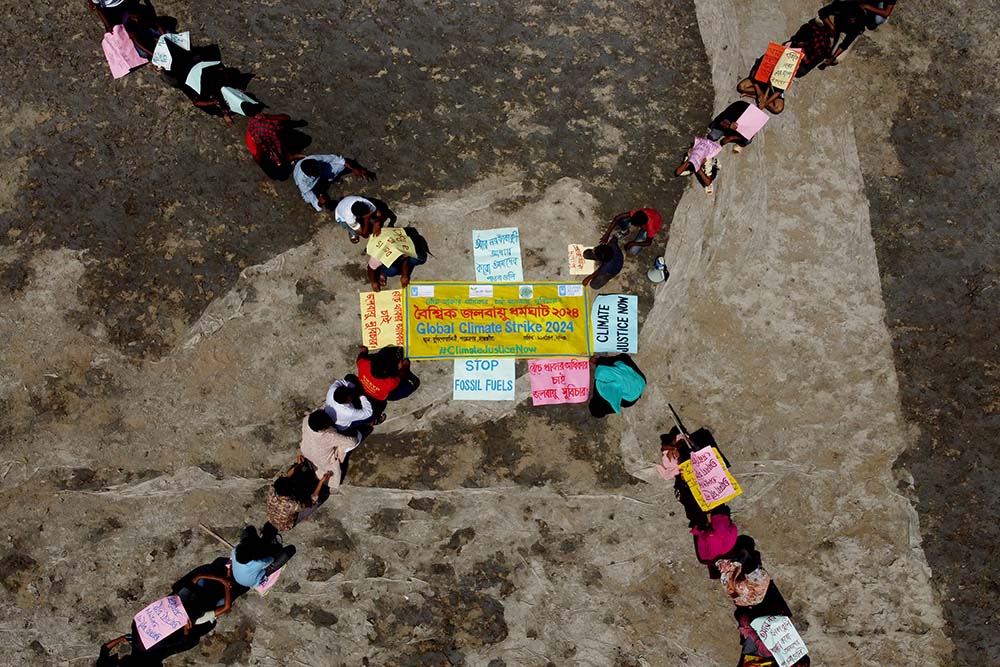
On 19 April, 2024 young activists from the ICRA project of Islamic Relief Bangladesh joined forces with the global community during the Global Climate Strike. Rallying under the slogan "Benche
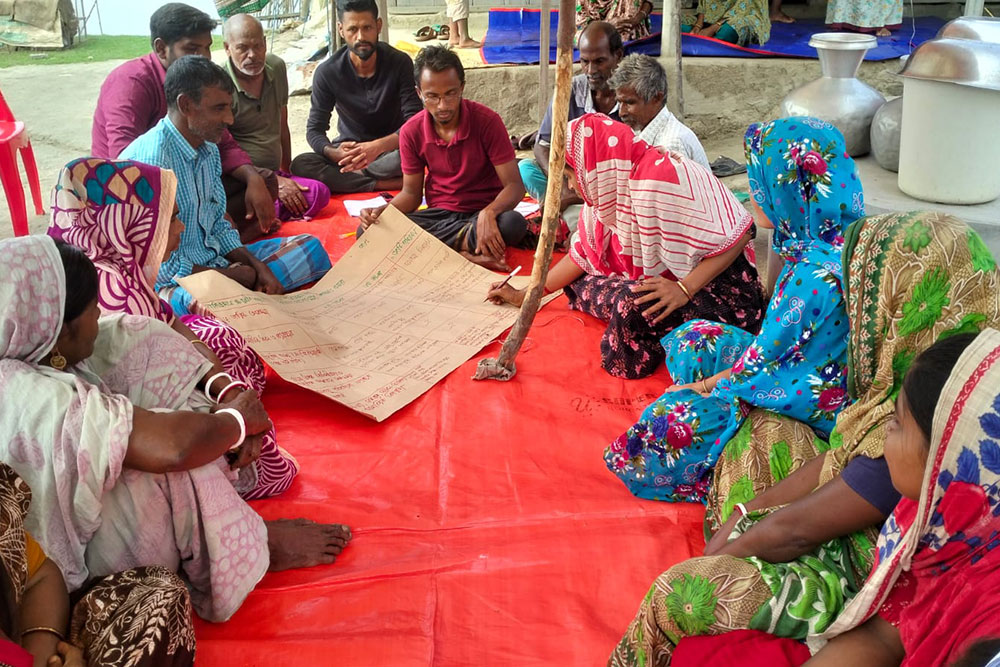
Climate change-induced hazards have had a profound impact on communities along the southwest coast of Bangladesh, particularly affecting low-income households, climate-vulnerable areas, and those heavily reliant on natural resources. Urgent
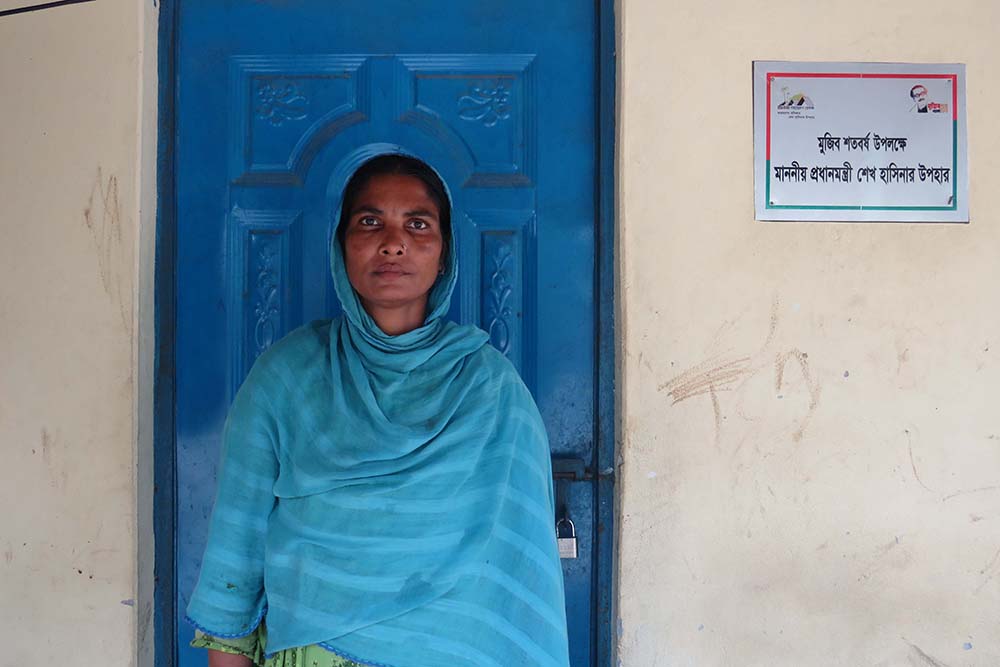
“I believe success must appear as a consequence of hard work. Myself is an example of this. Earlier I used to work at other people’s land and earn a very
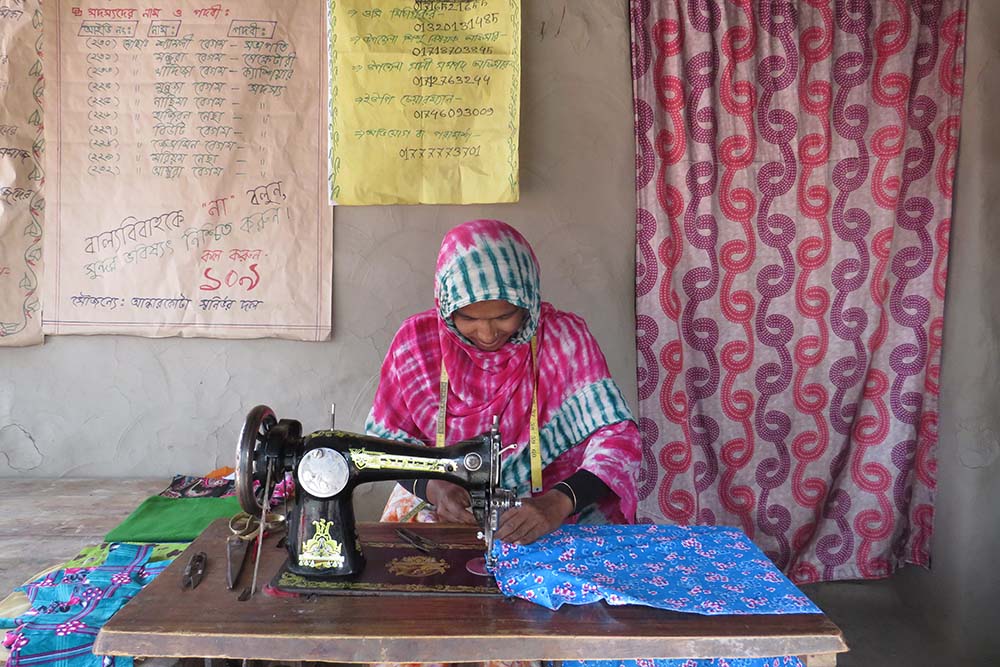
Khadija Begum (37), the only daughter of deceased Abdul Bari Mondal and mother Piyari Begum of Adharkota village located at Baluamasimpur union under Mithapukur sub-district. The family struggled to run
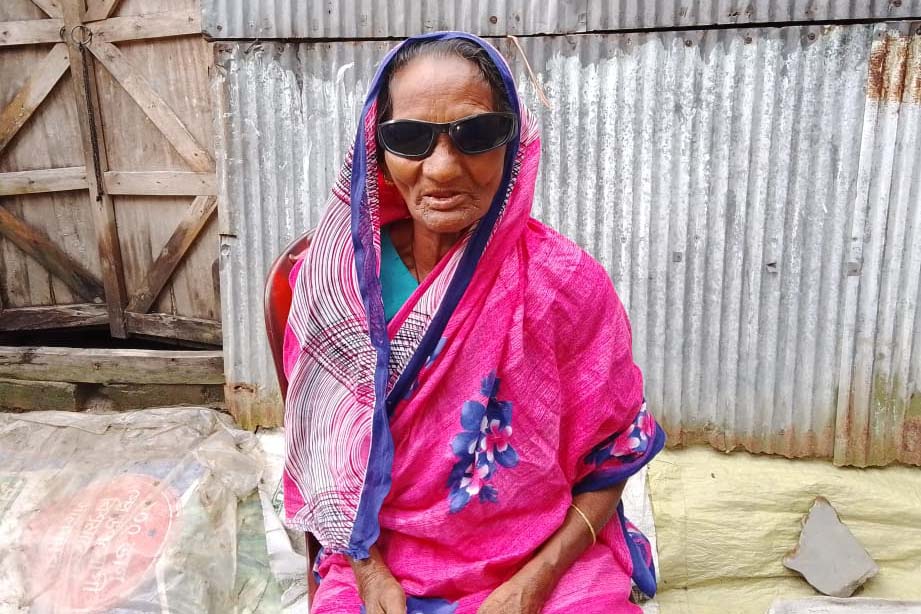
Salma Begum (60) lives at Kisamot Sherpur (Khetapara) village under Gangachara sub-district of Rangpur district. Her husband died five years back. Her eldest son also died. Her younger son manages
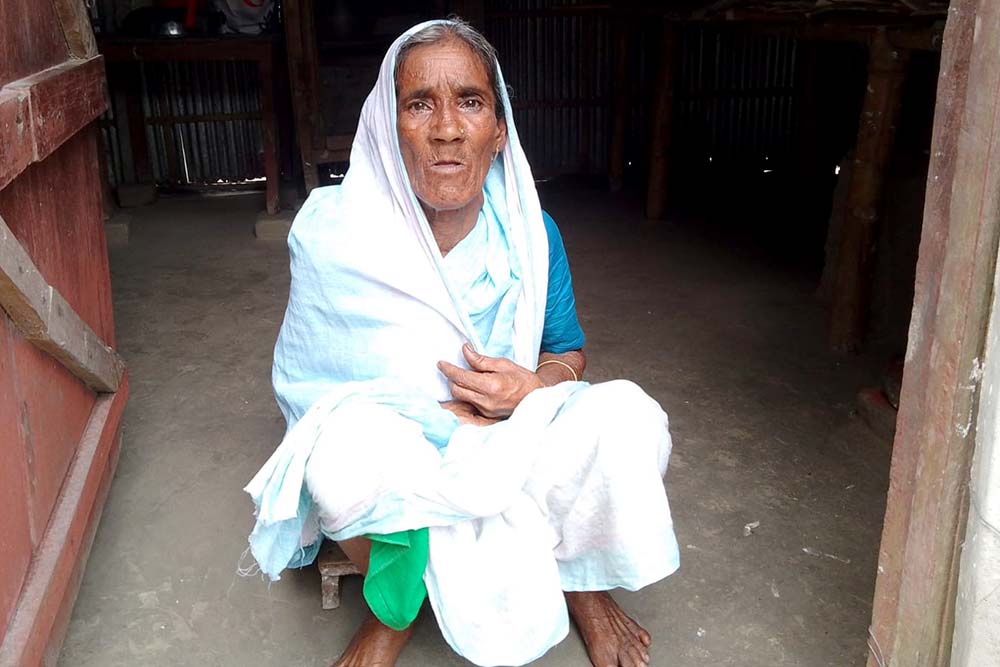
“Nothing but darkness, I used to see with my eyes. I could not do any work including my personal job like going to washroom, bathing, wearing clothes, etc. I could
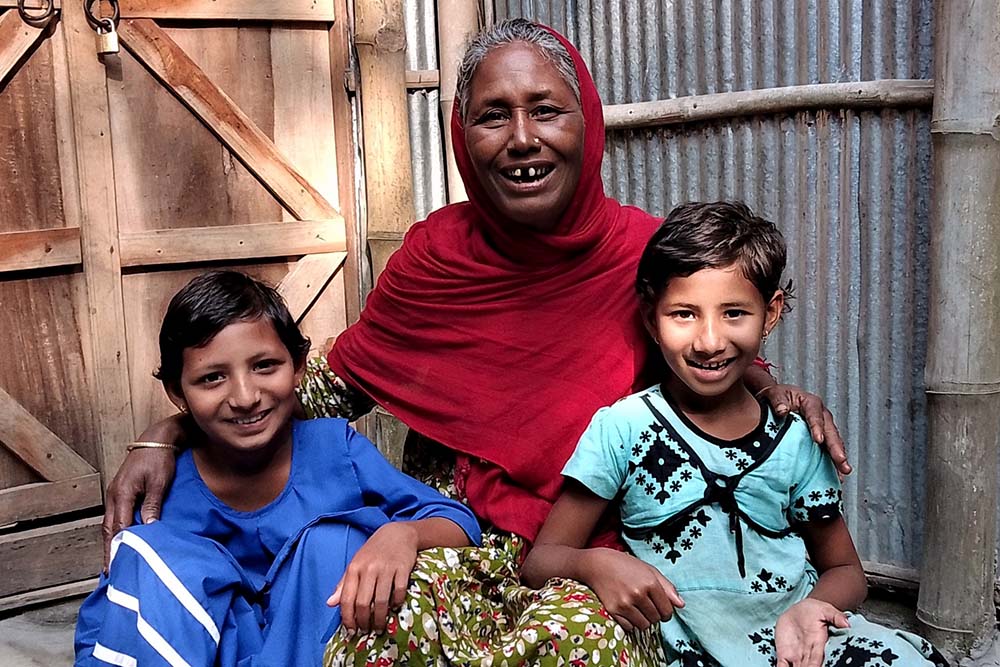
Mukta was a seasonal day-laborer. The proverb ‘flogging a dead horse’ became realistic in her life when her son-in-law (daughter’s husband) died, and her widowed daughter returned permanently to her

Thirty-four years Anowara Begum belonged to a typical middle- class rural family living at Khamarboksa village. Despite having little money, however, the family was somehow passing the days. Anowara was

To mark International Women’s Day, we are sharing the inspiring story of how one woman in rural Bangladesh changed her life for the better, with support from Islamic Relief. Women

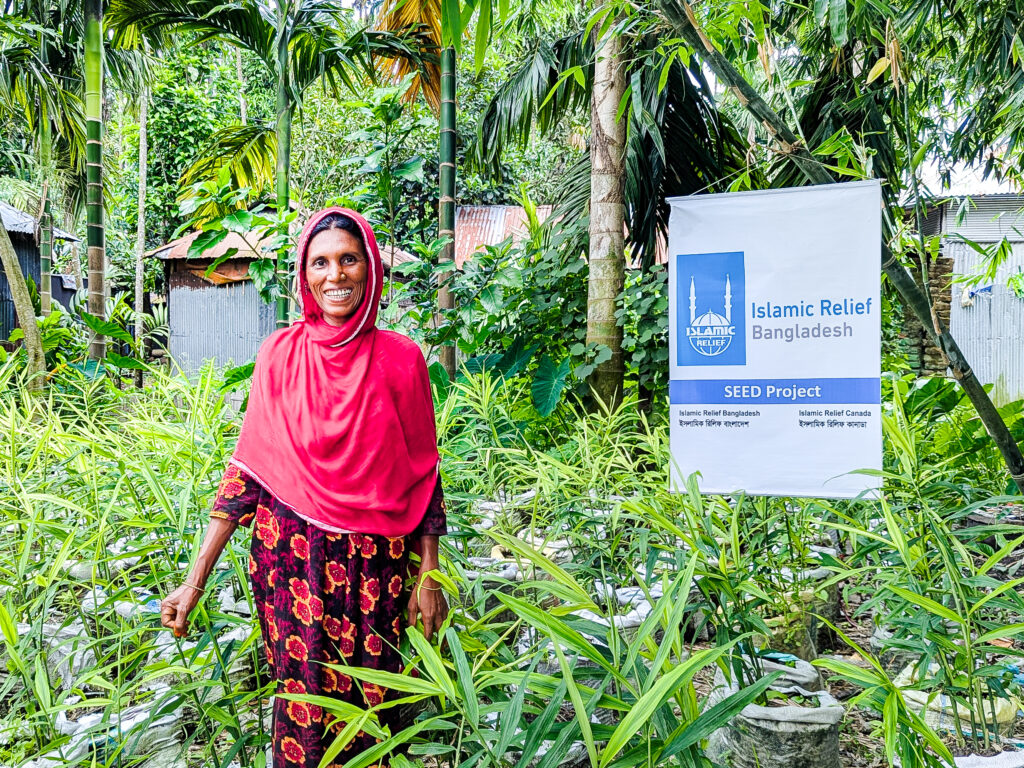
Once a day labourer in other people’s fields, Jorina now stands proudly in her own flourishing garden.

“In my days of sadness, I had no one. Every day was a struggle,” recalls Jorina Begum, remembering the years she spent homeless and working as a day labourer. After being abandoned by her husband and left to raise her young daughter alone, she found herself trapped in a cycle of poverty that felt impossible to break.
Her most painful moment came not from hunger but from watching her daughter suffer. After saving for years to arrange her daughter’s marriage, Jorina saw her hopes fall apart when the in-laws began mistreating her because the dowry had not been paid in full.

Everything changed when the Islamic Relief SEED project reached her village. Recognised as one of the most vulnerable women in the area, Jorina was selected to join the programme. The group quickly noticed her natural leadership and elected her as President of the Panjrabhanga Women’s Entrepreneur Group. Through leadership training and confidence‑building sessions, she gained knowledge, skills, and a renewed sense of purpose.

With a cash grant of 25,000 BDT, her own savings, and Qard Al Hassan (interest‑free loans), Jorina purchased a bull, a goat, and indigenous hens. For the first time, livestock ownership was within her reach. She set up a small vegetable garden using seeds provided by the project, earning extra income from the surplus produce. Each small step strengthened her resilience.

But she didn’t stop there. After receiving training in organic soap production, she took another interest‑free loan to buy materials and began making soap from home. Her products quickly gained popularity within the village and nearby communities. Today, she has a formal trade licence and is steadily expanding her business.

When her daughter was sent home in distress, Jorina refused to face the situation alone. She gathered the women from her group and together they visited her son‑in‑law’s family. By standing united, they were able to advise the couple, address the abuse, and bring her daughter back to a peaceful and supportive home. This collective strength became the foundation for Jorina’s continued progress.

From a day labourer living with constant uncertainty, Jorina has become a respected leader, a growing entrepreneur, and a woman who now provides for her family with confidence and dignity. Her journey shows how a combination of financial support, skills training, and social empowerment can help women break the cycle of poverty and rebuild their lives.

Islamic Relief Bangladesh, through the SEED project, is supporting women like Jorina from 2,000 rural households, helping them to become micro‑entrepreneurs and build sustainable livelihoods. By offering practical training, interest‑free loans, and financial support, the project enables women to increase their income, strengthen their resilience, and lead their families towards a more secure future.


Dear Motherland,

I am Rashid Ahmed, now a resident of FDMN Camp-07. Yet in every beat of my heart, I remain a son of Maungdaw. My soul yearns for the hills that touch the sky, the waterfalls that sang their eternal songs, the winding paths shaded by trees, and the endless green fields where I once played as a carefree child. In those golden days, neighbours were like family, our lives woven together with threads of harmony and laughter. Though time and violence have torn me away from that life, the memories of my birthplace remain carved into my soul – bright and unshaken, like stars that refuse to fade.

But those dreams were shattered when the soldiers came. One dreadful day, nearly 350 soldiers surrounded our village like a wall of fire. They set our homes on fire, the shelters that once held our joy and love. They dragged away our young men and women, subjecting them to cruelty too unbearable to describe. Screams filled the night, and every corner of my land was painted with fear. What once was a place of peace became a prison of terror. Such brutality became a daily reality until survival itself demanded a choice: leave behind everything we knew or be buried in silence. With trembling hands and a broken heart, I fled with my family, carrying nothing but the hope to live.

Every step toward the Bangladesh border was a journey between life and death. We walked through fire, hunger, and fear, knowing that at any moment our breath could be our last. Crossing into Bangladesh was for us nothing short of a Hijrah – a sacred migration for survival, dignity, and faith. The moment I stepped onto Bangladeshi soil, I felt as though life had been given back to me. For the first time in many nights, I breathed without fear.

I never imagined that Bangladesh would embrace us with such open arms, offering not only safety but also love and dignity. For this boundless compassion, I remain forever indebted to the government and people of Bangladesh. Here, we have received food to fill our hunger, clothing to cover our shame, water to quench our thirst, and shelter to protect us from the storms. We have been given access to education and healthcare, things denied to us in our homeland. And above all, we have been given the gift of safety.

I cannot forget the hands that reached out to us in our darkest hours. Islamic Relief Bangladesh has stood beside us time and again through Qurbani meat that fed our families during Eid, warm clothes that shielded us from the cold, essential items that carried us through hardship, and now shelter support that protects our dignity. These are not mere acts of charity. To us, they are lifelines, threads of hope that keep us alive in a world where we have lost almost everything. For this unwavering solidarity, I will remain eternally grateful.

Yet even as I write these words, my heart bleeds for my homeland. Myanmar is where my roots are buried, where my ancestors lived, and where the soil carries the scent of my childhood.

Though I am safe here, I remain voiceless, dependent, and incomplete. Life in a camp, however kind, can never replace the home I lost. My only dream is to return, to walk again on the soil of Maungdaw, to rebuild my life with dignity, and to live as a free Rohingya on the land of my birth.

That day has not yet come, but I wait with unshaken hope. One day, peace will return. One day, the doors of our homeland will open again. And when that day arrives, I will return, not as a stranger, but as a son, carrying with me the love, gratitude, and resilience that Bangladesh helped me preserve.

With endless love, unbroken hope, and tears that still fall for you,

Your beloved son,
Rashid Ahmed

In the heart of Mahmudpur Union, Nawabganj Upazila, Dinajpur, Laboni Akter’s story stands as a testament to resilience, determination, and the transformative power of opportunity. As a beneficiary of Islamic Relief’s SUPPORT project, she has successfully adapted to the challenges of climate change through the implementation of a climate-resilient integrated model farm while also establishing a thriving tailoring business.

Laboni’s journey was not without hardships. Determined to improve her livelihood, she initially took training in tailoring and started a small business from her home using a second-hand analogue sewing machine. With limited resources and a small customer base primarily consisting of her neighbours, she could only sew one or two garments per day, earning a modest income of 300 to 500 BDT.

However, as her skills and reputation grew, so did the demand for her work. Recognizing the limitations of her old sewing machine, she made a bold decision to scale up her business. As a rightsholder of the SUPPORT project, she accessed 30,000 BDT as a “Quard al Hasana” (interest-free loan) through her Self-Help Group (SHG). With this financial support, she invested in a digital sewing machine, significantly enhancing her efficiency and productivity.

Beyond tailoring, Laboni embraced a holistic approach to climate resilience with the guidance of Islamic Relief. She integrated cow rearing, advanced goat and hen rearing techniques, and climate-resilient vegetable cultivation into her livelihood, ensuring both food security and income generation. To further sustain her farm, she adopted vermicomposting for her homestead garden and started Napier grass cultivation to address the scarcity of cattle feed in her area. These strategic adaptations have enabled her to create a self-sufficient, climate-resilient ecosystem at her home, reducing her dependence on external resources.

Today, Laboni’s income has increased by 50%, allowing her to sew four to five garments per day and earn a minimum of 1,000 to 1,200 BDT daily. Her diversified livelihood strategies have provided stability, ensuring she and her family have access to both nutritious food and financial security.

Laboni’s story is an inspiration—demonstrating how access to resources, skills training, and financial support can empower individuals to break the cycle of poverty and build resilience against climate challenges. Through her dedication and the support of Islamic Relief, she has transformed her life and secured a sustainable future.

On 19 April, 2024 young activists from the ICRA project of Islamic Relief Bangladesh joined forces with the global community during the Global Climate Strike. Rallying under the slogan “Benche Thakar Odhikar, Chai Jalobayu Subichar” (The right to live, demand for climate justice), they marched across Satkhira, Jashore, and Sylhet calling for prompt action to combat climate change.

In Sylhet, youths advocated for a shift towards renewable energy sources like solar and wind power, emphasizing the need to abandon costly and harmful fossil fuels. With #ClimateJusticeNow as their motto, they pushed for the release of loss and damage compensations.

In Satkhira, the focus was on banning fossil fuel use, conserving nature, protecting biodiversity, and cutting down emissions of global warming gases. They called for an environmentally friendly energy transition.

In Jashore, a peaceful demonstration highlighted the immediate need to address the climate crisis, aiming to raise awareness and encourage policy reforms to lessen its effects.

Climate change-induced hazards have had a profound impact on communities along the southwest coast of Bangladesh, particularly affecting low-income households, climate-vulnerable areas, and those heavily reliant on natural resources. Urgent action is required to address the destruction of natural resources, physical structures, and development infrastructure resulting from the escalating risks of climate-induced disasters. To effectively adapt and enhance community resilience, sector-specific, location-based adaptation plans are essential.

The implementation of Local Adaptation Plans of Action (LAPA) is crucial to ensuring active community participation and ownership in the adaptation planning process, contributing to the mainstreaming of locally led adaptation efforts. Islamic Relief Bangladesh is actively leading LAPA initiatives in climate-vulnerable areas, including Khulna, Satkhira, Jashore, and Sylhet City Corporation under the project “Scaling up Inclusive Climate Resilience of Vulnerable Communities through Locally led Adaptation (ICRA).”

Collaborative efforts involving community members, including women, youths, Disaster Management Committee members, local elites, and Civil Society Organizations, utilize tools such as Transect walks, Hazard and Resource Maps, Hazard Identification and Prioritization, Seasonal Calendars, and Risk and Vulnerability Matrices. This collective approach effectively maps area-specific hazards, their causes, vulnerabilities, and available resources.

The inclusion of women and persons with disabilities in LAPA not only addresses individual needs but also promotes women’s empowerment and the development of inclusive adaptive solutions.

“I believe success must appear as a consequence of hard work. Myself is an example of this. Earlier I used to work at other people’s land and earn a very poor living. My earning was inadequate to run my family. Currently, my hard work paved the way to success. I rear cows and goats, and also try to earn from different endeavors. I have not left any stone unturned. I now meet all my basic family needs. I happily live with my two daughters”, Lucky Begum, one of the project participants expressed her while the staff discussed with her.

Thirty- three years old Lucky Akter lives in Lalchandrapur village. This village is located in Ranipukur union under Mithapukur sub-district. It is 12 km away from the sub-district headquarters. Lucky was born in a poor family. Like other poor parents her parents married Lucky off at a very early age. She was married off to Lalu Mia (39) of the same village in 2002. Lalu Mia was a day labourer and he did not have any arable land of his own except a tiny piece of land where he had his small house. Being a day labourer, he could not meet the basic needs of his family. Additionally, he had a bohemian attitude and didn’t want to take any kind of responsibility to run the family. Soon after a few months of marriage, he was found very reluctant to go for work. As a result, the family fell into trouble to meet the daily needs. Finding no other options, Lucky Begum started to work as domestic help to run the family. Although Lulu Mia had no contribution in family maintenance, however, he compelled Lucky to give him money. There was no peace in family as fighting was a regular event. Under such circumstances, a year after the marriage, Lucky Begum gave birth to twin girls. This created another tension as her husband was not happy seeing the girls. One day, he left the responsibility of the family and went away. Lucky Begum was completely devastated. She had no choice but to return to her parents. She started to work in another house as a helping hand again. She had been taking care of her two daughters and desired to raise them up as educated persons. Her father helped her a lot to take care of her daughters and run the family. To educate the daughters with formal academic education, Lucky Begum enrolled them in a school. Her ultimate goal was to provide them good education to her daughters so that the girls would have been able to work as service holders in the future. Lucky Begum states, “No matter how hard it is, I will try my best to ensure quality education to my daughters to establish them in the society so that they would be valued and respected”. However, the hard-luck woman didn’t have enough source to raise her income to run the family and cover the educational costs as well.

While Lucky Begum was searching for an alternative, she heard about the project of Islamic Relief and communicated with the project staff. Following the pre-determined criteria her daughter Kakali (11) was selected as the prime rightsholders and subsequently Luck begum being the mother of Kakali was chosen as other right holder and subsequently enrolled as member of local SHG – Lalchanrapur. After the nomination Lucky Begum started participating in the SHGs meeting and learnt the process of depositing the savings; borrowing interest free loan from SHG etc. Once the project staff conducted an in-depth interview (IDI) to identify the suitable business for her family, she disclosed her desire of cattle rearing. Assessing the feasibility as well as Lucky’s interest, the project provided her training on cattle rearing. After getting the technical training from the project, she received a cash grant of BDT 5000 to start the IGA. In the meantime, Lucky Begum’s savings reached to BDT 30,000. Lucky Begum purchased a cow with BDT 50,000 together with the grant amount and the BDT 15,000 loan which she had availed from the SHG. She started rearing the cow and it had a good growth. The possible price of the cow was estimated as BDT 90000. It is quite visible that the price of her productive asset has increased. In addition to raising the cow Lucky Begum works as a day labourer and earns about BDT 500 per day. Moreover, her daughter got educational stipend and supportive materials like school bags, geometry box, umbrella etc. from Islamic Relief to continue her education. In addition Islamic Relief also supported Lucky to include her in the Social Safety Net (SSN) program from where she gets support. It is praiseworthy to note, she got a two-roomed house from the Prime Ministers’ housing project. IRB facilitated her application for the housing opportunity. By getting all these sorts of support from IRB and other means, now her family is running well and she found to be very instrumental to come out of poverty. Her house was found very clean. It seemed that she has been maintaining a hygienic norm to maintain her household. It is to note that to enhance her knowledge and skills on child rights, protection and other social issues she had been provided with necessary information through sessions, orientations, training etc. On top of the above Luck was selected as the cashier of the SHGs and she was provided leadership and management training to develop her capacity as a leader. With her improved leadership capacity, she is found to be very committed to disseminate the learning among the communities. Seeing her upgradation in terms of economic and social aspects everyone in her community now respects her.

At present two of her daughters Kakali and Kuheli are studying in grade 5. Both of her daughters are good students. Lucky Begum’s found to be very committed not to marry off her daughters at an early age. At the end of the session while her case was noted, happy Lucky Begum said “If we apply the learnings whatever Islamic Relief Bangladesh has taught us, success would eventually follow us. I must say that, IRB came to us as a blessing in our village.”

It is understood from the discussion with others that Lucky’s progress motivated others in the village and they would like to work like Lucky by joining the local SHG as a member.

Khadija Begum (37), the only daughter of deceased Abdul Bari Mondal and mother Piyari Begum of Adharkota village located at Baluamasimpur union under Mithapukur sub-district. The family struggled to run their family as there was no steady income source. Even they did not have any significant productive asset. Her mother used to work as housemaid to the local rich people’s house and earn a meagre income.

It was very difficult to maintain their family with her mother’s little income. Her academic education got stopped at grade eight after the untimely demise of her father. “It was very unfortunate as my father had a sudden death. My mother and I were completely devastated. My mother used to work as a domestic help and she could not afford to pay the tuition fees and other costs of my education. I had a dream of doing some job after completion of my school certificate. My father wanted me to get educated as well. But our dream was shattered in a blink of eye,”- Khadija recalled her past.

Most of the girls get married at a very early age in Bangladesh. Many poor parents treat girls as a burden and get them married off. Same happens to Khadiza. Finding no other alternative, her widow mother married her off to one of her cousins named Hafizar Rahman (42) in the same village in 2007. The poor widow had no choice despite the age gap and other faults. Hafizur Rahman, Khadija’s husband was also a poor person who used to earn his living by renting out his labour to the community to help the wealthy farmers planting and harvesting their crops. The family did not have productive asset except 8 decimals of homestead land. Due to low earning, the family run with much hardship. To raise the income Hafizur started cultivating other’s land as sharecropper, however the situation didn’t improve remarkably. In the meantime, Sadia Akhter Taslima was born in their family in 2009. As the family had to manage the needs of an additional person, it was like pouring gasoline to the
fire. The family was desperate to look for alternative sources of income.

To combat with the hardship and intolerable poverty Khadiza received tailoring training from the neighborhood. After receiving the training, she bought a second-hand sewing machine at BDT 7000.She had to borrow the money from different sources to purchase the machine. After buying the machine she started earning some money by sewing the dresses for the girls and women of her neighborhood. But due to insufficient amount of capital she was unable to store the clothes that lowered the demand of her tailoring endeavors. So, their miseries still adhered with them. Khadija again gave birth to her second daughter Tabassum Humaira in 2015 and due to which the family got in another trouble as the expenses increased. Even though the family was having a lot of difficulties, Khadija did everything with her power to ensure the education of her children and enrolled them in school.

The Preventing Early Marriage in Bangladesh (PEMB) Project began operating in Khadija’s neighborhood in January 2021 while her family was struggling to overcome the hardships they had been experiencing. As matched with the criteria of being adolescent from vulnerable family, Sadia Akhter Taslima (13) Khadija’ elder daughter was selected as a project participant. Subsequently, Khadija was selected as another rightsholders as the female head of the family. After selection as per project’s modalities, Khadija was provided with BDT 5000 as cash grant to establish Income Generating (IGA). The project also provided her with necessary technical training on tailoring, cow and goat rearing, cow fattening, small business to establish and manage the IGA efficiently. Since Khadija had prior experience to work as tailor, she decided to invest in tailoring sector. Therefore, she bought more clothes to revive the tailoring business. While she started the tailoring business again, she earned around BDT 300 – 400 per day.

After meeting the familial expenses, she was able to save money. She bought a cow and two goats with her savings. Khadija was too adamant to raise the income of her family to get rid of the poverty and to meet the necessities of the family. As such, she took BDT 10,000 as Quard-Al-Hasana (interest free loan) from the local Self-Help- Group (SHG) and had leased a piece of land of thirty decimals to cultivate agricultural crops. With all the above efforts, her familial income has raised and she now she earns almost BDT 15,000 – 20,000 per month. Her productive asset has increased almost four times compared to her earlier days. Apart from these, considering her integrity, sincerity and skills the local SHG members elected her as a cashier. The project also provided her with necessary training on leadership and management to transform her a leader and spokesperson of the SHG. Khadija has been leading her team efficiently. During the discussion she found to be empowered. Relieving from the miseries Khadija expressed her view as “All the project initiatives helped me increasing my familial income that resulted to bring out my family from the miseries and distresses of not meeting the basic needs. We were just struggling to ensure two meals a day. Alhamdulillah Islamic Relief has dragged out from poverty. I will ensure my girls education and not marry them off early.” Khadija vowed to provide higher education to her daughters.

At present, Khadija’s first daughter Sadia Akhter Taslima is studying in grade eight of Santoshpur High School. She wishes to make her admission in the nursing college to support her building the career as nurse after passing SSC. Khadija also is found very optimistic not to marry off her daughter at the early age like herself. During the interview session she remarked “I got married at a young age. I understand the pain. I will never marry off my daughter at a young age”.

And finally, to acknowledge the efforts of Islamic Relief she said, “Islamic Relief Bangladesh has showed us the ways of improving the quality of our lives and livelihoods and also helped to build an interest-free society”.

Salma Begum (60) lives at Kisamot Sherpur (Khetapara) village under Gangachara sub-district of Rangpur district. Her husband died five years back. Her eldest son also died. Her younger son manages his own family, and does not take care of her mother. Salma’s husband was too poor and had no cultivable land except a tiny piece of homestead land. After the death of her husband, the penniless Salma fell into an ocean of sufferings since she didn’t have any income to ensure even a single meal a day. Salma started working as a domestic helping hand to others’ households, and succeeded in managing at least a single or double meal for her a day. Days were passing by like this. But destiny didn’t remain steady. Once, she discovered that she could not see things well. Some of her neighbors suggested her to visit the doctor; however, due to lack of awareness and money, she did not go to the doctor. Her vision was decreasing day by day. As she could not see things well, people didn’t engage her as domestic help. It got harder for her to win the daily bread. Finding no other alternatives, she started begging. But she could not go a bit far to ask for assistances due to poor vision. Even she could not do her personal work like bathing, going to the toilet, etc. All these made her life come to an ending point.

One day she came to know about an eye screening camp, organized by Islamic Relief Bangladesh while the announcement of the camp was circulated through loud-speaker. She went to the Patient Screening Programme at Betgari Union Parishad, Gangachara, Rangpur on August 20, 2023. She was diagnosed as a cataract patient. At that time her visual acuity was VA: L/E-PLPR, R/E-HM. After identification, she was asked to go to hospital for surgical operation to restore the vision. The project staff assured her that she would not need any money for the operation as IRB would bear all related costs. She was admitted into the eye hospital, selected by IRB, where she underwent a surgical operation on August 21, 2023. The next day her vision was measured 6/9; she regained her vision to see things. She was found to be very happy, when the project staff received her at the hospital to send her home. She expressed her thankful gratitude by uttering, “For the last 3/4 years, I was not been able to do any work. I used to sit down at a place to beg either for money to meet my ends or food from other people. Though I knew begging is one of the most shameful jobs, I was undone; I had no alternative. But now I am able to see. I will start working as a helping hand to earn my own bread.” She gave thanks to IRB and the donor as well.

Currently, Salam Begum is capable of doing her own work including going to the washroom, bathing, even going somewhere else. After the cataract operation, a visit was paid to Salama Begum’s house for ensuring post-operative support. It was found that she was sorting out the leaves from a kind of leafy vegetable. With the improved vision, she is again a self- dependent person.

“Nothing but darkness, I used to see with my eyes. I could not do any work including my personal job like going to washroom, bathing, wearing clothes, etc. I could see a little bit during daytime but nothing at night. I had to wait for someone to help me. It is impossible to express how hard my days were! But today at this very moment, I can see everything; I can’t express my feelings. I would like to express my deep gratitude to Islamic Relief Bangladesh for my cataract operation; IRB has enabled me to see the light of the world again.”, said Mst. Hasen Banu (65 years) during the post-operative visit by the project staff.

Hasen Banu, with her paralyzed husband and an intellectually-disabled son, lives at Betgari Uttar (Nalurpara) village under Gangachara Upazilla of Rangpur district in Bangladesh. Her husband didn’t have much land to cultivate crops. Once the poor fellow had a stroke and got paralyzed; he lost mobility and even could not do own task without the help of others. His income also got stopped. Finding no alternatives, Hasen Banu started working as a domestic help. Though her earning was poor, she could have managed at least one/two meals for the family members. But that also suspended when she became visually-impaired. She could hardly see things during day and noting at night. Her working ability worsened gradually. Not only this impacted the lives and livelihoods of her family but also affected her regular movement. Under such conditions, she consulted a local quack doctor who suggested her to go to an eye hospital. But due to lack of money and other supports, she could not afford visiting the doctor to diagnose her problem. She was leading a terrible life. Her family was totally dependent on the support of the community people. On August 20, 2023, she was identified as a cataract patient at an eye camp organized by IRB. When she came to know that she had to undergo a surgical operation, she got frightened and decided not to go to the hospital as she was afraid of doing the operation on one hand and on the other, she thought of managing the costs for the operation. The project’s staff let her know that she would not need a single penny even for the travelling cost for the cataract surgical operation. She was assured of that Islamic Relief will bear all the costs related to the operation process. She then agreed and went to the hospital. She had the cataract surgical operation on August 21, 2023. After having the operation, her vision was measured as 6/9. It means her vision got improved. She was released from the hospital with the capacity of seeing everything during day and night. She started doing her household chores and her personal works by herself since her vision got improved.

During the postoperative visit, at her household she was found enjoying chatting with her family members and doing some household chores. She was found to be very happy as her vision has regained. Her future plan is to “ensure a secure life for her differently-abled son”. She disclosed such a desire when the staff asked her about managing the family.

Mukta was a seasonal day-laborer. The proverb ‘flogging a dead horse’ became realistic in her life when her son-in-law (daughter’s husband) died, and her widowed daughter returned permanently to her house along with two granddaughters. Mukta’s family had to struggle for two meals a day. Her days were filled with stress and struggle as she didn’t have any money for investment to increase income.

Mukta was selected as a member of the ALO Plus project in 2021, and then got elected as the President of Aldatpur Self-Help Group (SHG). She regularly attends in weekly group meetings and deposits savings as much as possible. She shares her problems with other members in the SHG. The SHG members suggested her to marry her widowed daughter off; and finally, her daughter got married for the continuous efforts of all members of the SHG.

In the meantime, Grass Root Cooperation established environment-friendly stove manufacturing factory in the area. Mukta wishes to get a job in the stove manufacturing factory. She shared her intention in the weekly group meeting. All the group members went to the office of the factory and discussed the matter with the respective person. As a result, the office agreed, and provided hands-on training on stove manufacturing to Mukta. At present, she is working in the stove making factory and earning BDT400 – 500 per day.

Mukta received grants support from the project and bought 8 goats with BDT 24000. Current value of those goats is around BDT 40000. Her deposited savings is BDT 1240 and she paid off Qard-al-Hasana (interest-free loan) of BDT 15000 to SHG. Her two granddaughters live with her; Nine years old Fafiza Akter Moyna studies in grade three and six-years old Lamia Akter Tissha studies in grade one.

Mukta happily said “We had to struggle a lot. Many at times there was no food at home and the children had to starve. It was very painful as well as shocking when I could not ensure three meals for my granddaughters. Now I am able to afford three meals in a day. I can’t describe my hardship in words.”.

In future her plan is to establish a cattle farm in her house and she wants to continue study of two orphan granddaughters. She expressed gratitude to all concern for physical and mental support of dispelling food crisis.


Thirty-four years Anowara Begum belonged to a typical middle- class rural family living at Khamarboksa village. Despite having little money, however, the family was somehow passing the days. Anowara was happy with her family. The whole family completely devastated after the sudden demise of her husband as he was the lone earner of the family. “Sudden losing of my husband put my whole family in a precarious condition. I did not know what to do and how I would feed my three young kids”- Anowara narrated her situation. Finding no other alternatives, she became a day-laborer to meet the needs of the family. However, her earning was not enough to support her family.

Anowara got selected as a right-holder of the ALO Plus project of Islamic Relief. Although she had a knack for the skill of tailoring she still needed some capital to make something of it. Observing her interest, she was selected as a participant to receive TVET (Technical & Vocational Education Training) from the project and she received training on tailoring & dress making from UCEP, a renowned TVET-providing institution. She also received cash grant for starting IGA. After receiving training, she intended to start her own tailoring and dress making business. To make her plan successful, she purchased two second-hand sewing machines from her neighbors immediately after the completion of her training along with different types of clothes to make dresses. Initially she faced a lot of challenges. She was struggling to secure sewing orders from the locality as there were other competitors. She said, “It was difficult to get order because I was new in the field. Customers didn’t trust me whether I would perfectly make their dress or deviate the shape and size”. Under these circumstances, she started discussing the issue with others. “I talked with neighbors, group members and the respective IR supervisor to understand what to do. Some of them advised me to make single use shopping bag and sell those in the local market. I thought of the proposition and started to get information in regards to collecting raw materials and selling points of single use bag. Having all the necessary information and technical guidance from the project team, I decided to making single use shopping bag. Now I am a bag maker. I sell my products to 4 shops at Burirhat market and earn a handsome amount of money regularly”, she described. Anowara has also bought a cow and a goat. She nurtures those cattle in a good way. She has an intention to start a small livestock farm to diversify her earnings.

Anowara shared her success in Soto Rupai SHG group in the weekly meeting. “Currently, I am earning around BDT 5000 in every month. This is not a huge income but it brings hope to a widow that I can take the lead of my family and can fulfil the requirements of children. By the grace of Almighty my children do not starve any more. As a mother I am happy to provide meals to my children,” she concluded.

To mark International Women’s Day, we are sharing the inspiring story of how one woman in rural Bangladesh changed her life for the better, with support from Islamic Relief.

Women in Bangladesh face many challenges and obstacles to empowerment, from harmful social norms to a lack of access to education and employment opportunities. For women with disabilities, life is even more difficult.

Piya, lives in a remote village in the Rajarhat sub-district of Kurigram in northwestern Bangladesh. The 29-year-old has a hearing impairment and, like many girls in rural Bangladesh, was a victim of early marriage, sometimes known as child marriage.

In rural Bangladesh, women and girls have few opportunities to earn an income and are often viewed as financial burdens. Marriage is the most common way to relieve that burden, prompting many families to marry off their daughters before the girls reach adulthood.

Piya’s parents were worried she might also face discrimination because of her hearing impairment and thought marriage could shield her from that. So, at age 14, she began married life. Social norms around the role of a wife made it impossible for Piya to continue her education, forcing her to drop out of school.

Piya’s husband, Chand Mia, works as a day labourer but struggles to make ends meet with his limited income. Ensuring his wife and children received 3 nutritious meals a day was a constant struggle for him. The situation was difficult for Piya too.

“I experienced profound sadness as I could not contribute more to support my husband. I knew I had to take action, but I was unsure where to begin or what steps to take. The inability to provide meals for our children was particularly painful for me,” she says, reflecting on that challenging time.

A turning point
Piya’s life began to change when she became involved with Islamic Relief. Through the Promoting the Model for the Elimination of Extreme Poverty in rural Bangladesh (EEP) project, she received training, seed money and technical support to launch a business, help break the cycle of poverty and boost her socioeconomic well-being. Piya is one of almost 3,500 people facing extreme poverty who will receive support through the 36-month-long project.

Determined to change her family’s situation, Piya embraced the opportunity. With a seed fund of BDT 12,000 (approx. £87), she began raising goats, expanding her modest farm with Islamic Relief’s support.

Empowered by growing confidence, Piya sought out other streams of income by joining a local self-help group. She found a community offering mutual support as well as sharing knowledge and resources, and became a cashier for the group.

Piya has expanded her small home farm into a diverse landscape, home to goats, chickens, and cows

Joining the self-help group opened the door for Piya to make use of Islamic microfinance services. She also took out interest-free loans from the group’s fund to expand her endeavours. Her small home farm transformed into a diverse landscape, home to goats, chickens, and cows. Project initiatives, such as animal health camps, supported Piya in keeping her animals healthy and well.

Leasing a productive piece of land, Piya cultivated chilli and ginger, which led to substantial monthly profits. She also cultivated her own fodder, saving the money she would have spent buying it, and engaged in other cost-effective farming practices with support from Islamic Relief. Her husband supported her efforts to expand the farm, which became a collaborative effort for the couple.

Piya’s investments and hard work significantly improved her family’s financial situation. She transitioned from depending solely on her husband’s income to becoming a self-sufficient contributor. Beyond her farming activities, Piya became an inspiration within her self-help group, motivating others to pursue their ambitions.

On this International Women’s Day, Piya’s story epitomises determination, resilience, and triumph over adversity. Through her efforts and the right opportunities, she not only achieved financial security but also became an inspiration for those around her.